

Since 2015, we have been implementing community-based coral reef restoration in Labuhan Bajo Village, Utan Sub-district, Sumbawa District, West Nusa Tenggara, Indonesia. This long-term initiative aims to restore degraded coral reef ecosystems while strengthening local knowledge, participation, and stewardship.
Restoration Phases and Methods
2015 – Early Restoration Efforts
With support from the Van Tienhoven Foundation and the Rufford Foundation, coral restoration activities began using concrete structures reinforced with heat-treated steel. These structures provided a stable substrate for coral larvae to settle and allowed strong involvement of local community members in construction, installation, and monitoring.
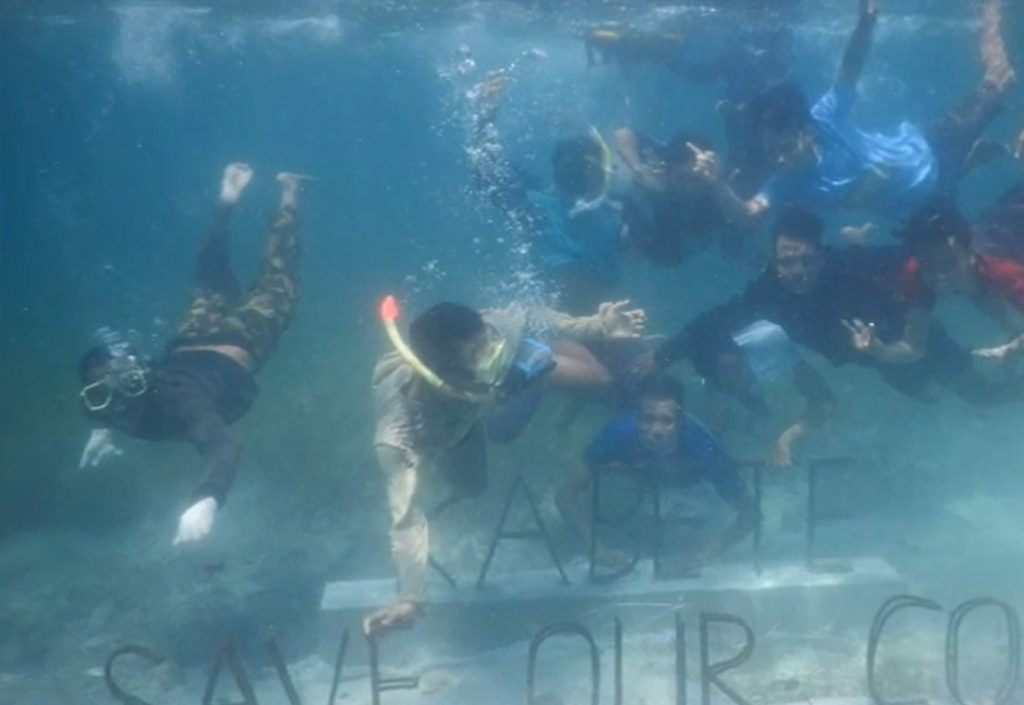
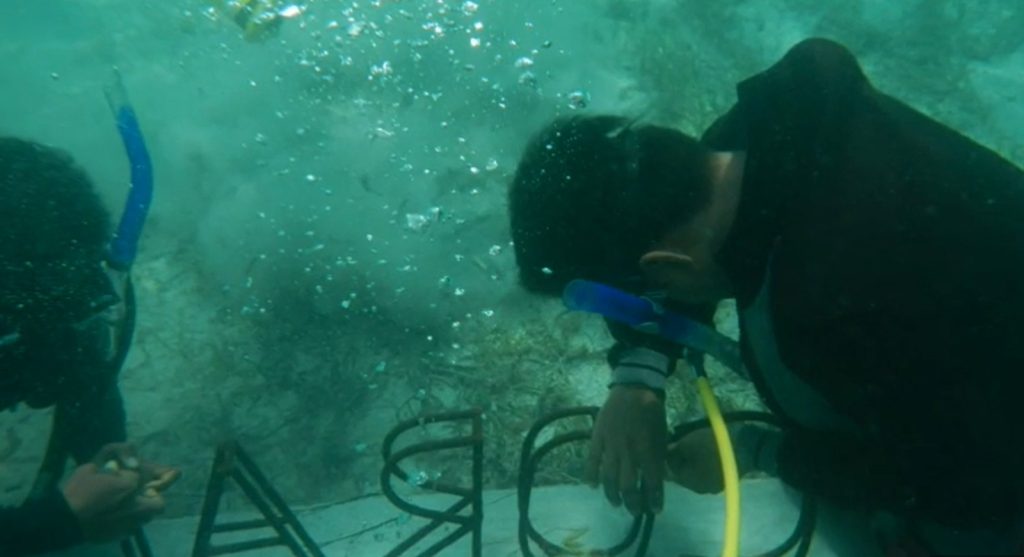
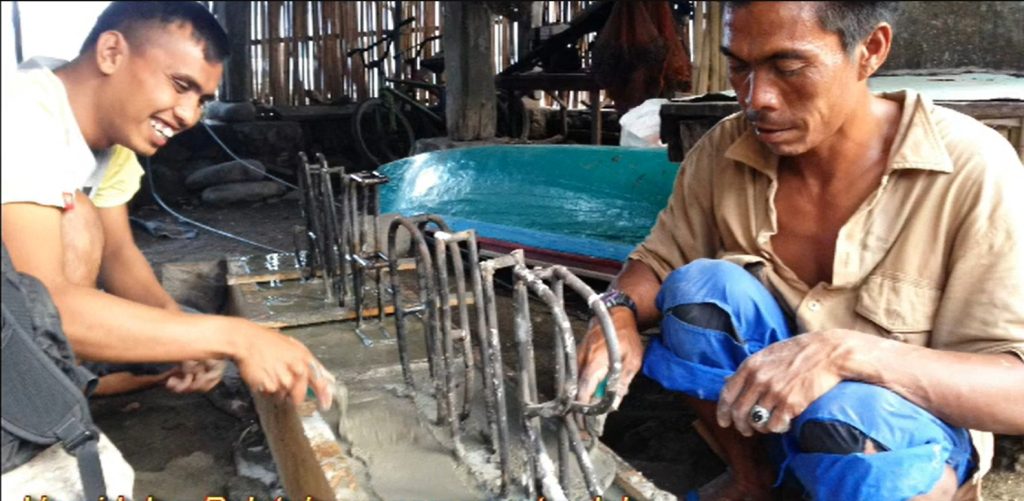
See the video from 2015, 2018, 2021, and 2025 below.
2017 – Local Innovation and Academic Collaboration
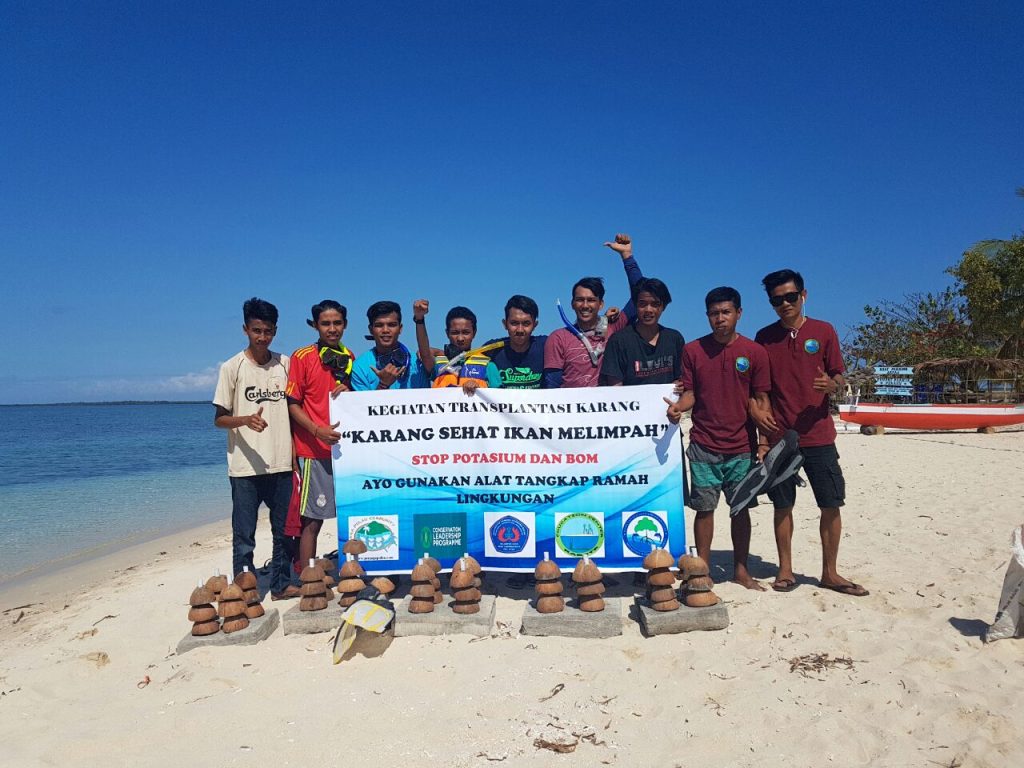
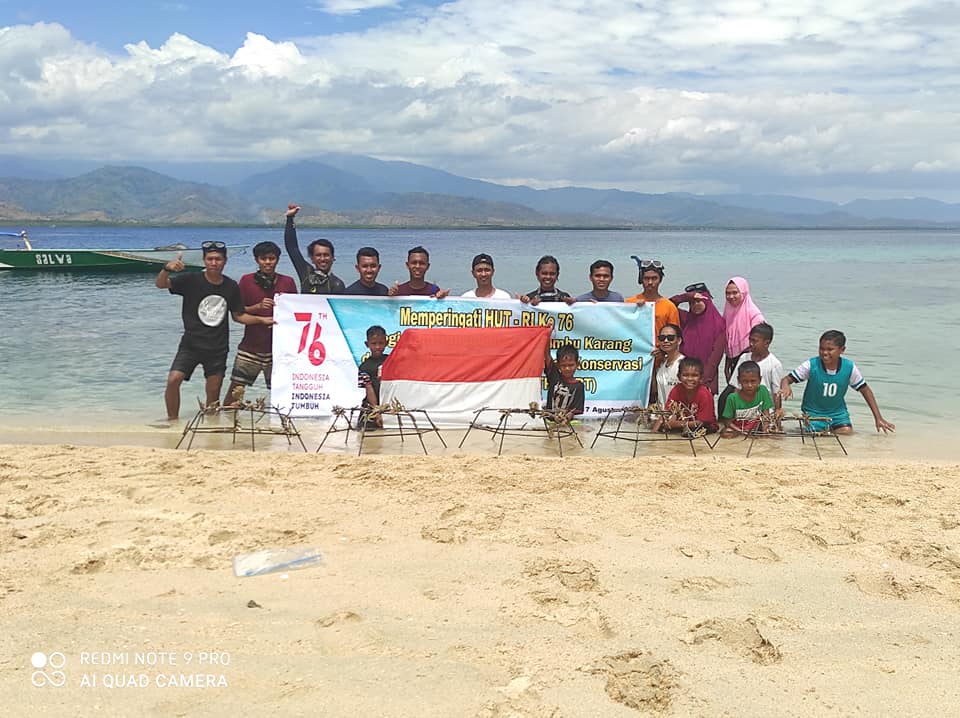
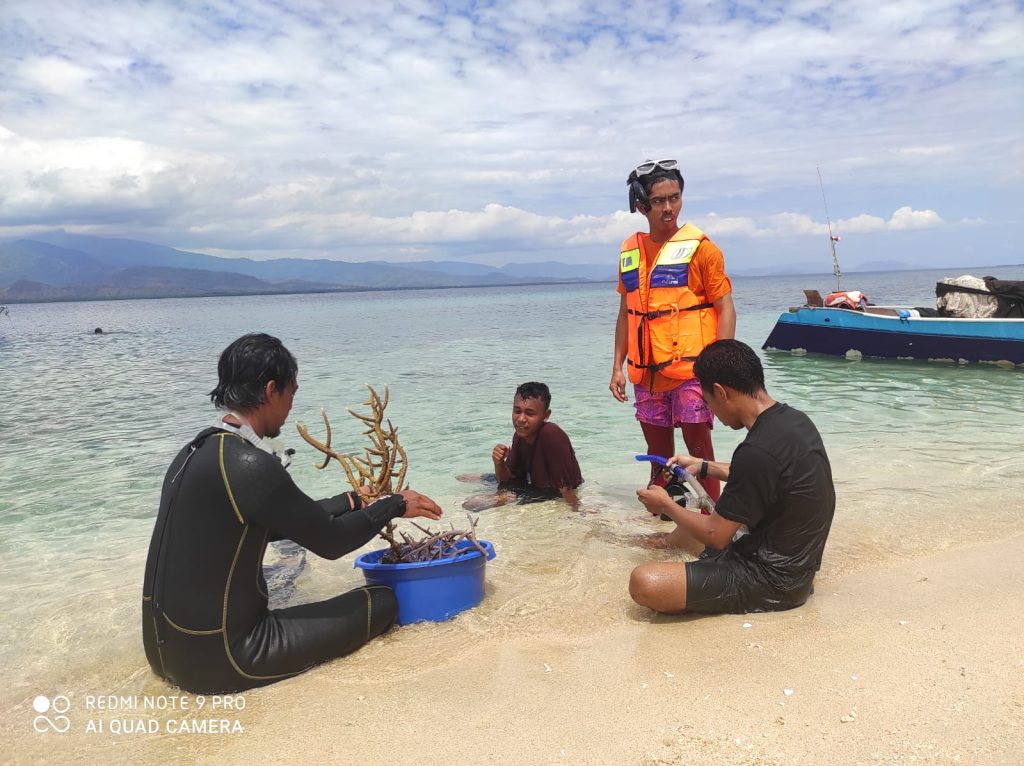
In 2017, restoration efforts expanded through collaboration between the Labuhan Bajo community and students from Universitas Samawa. During this phase, several alternative methods were tested, including:
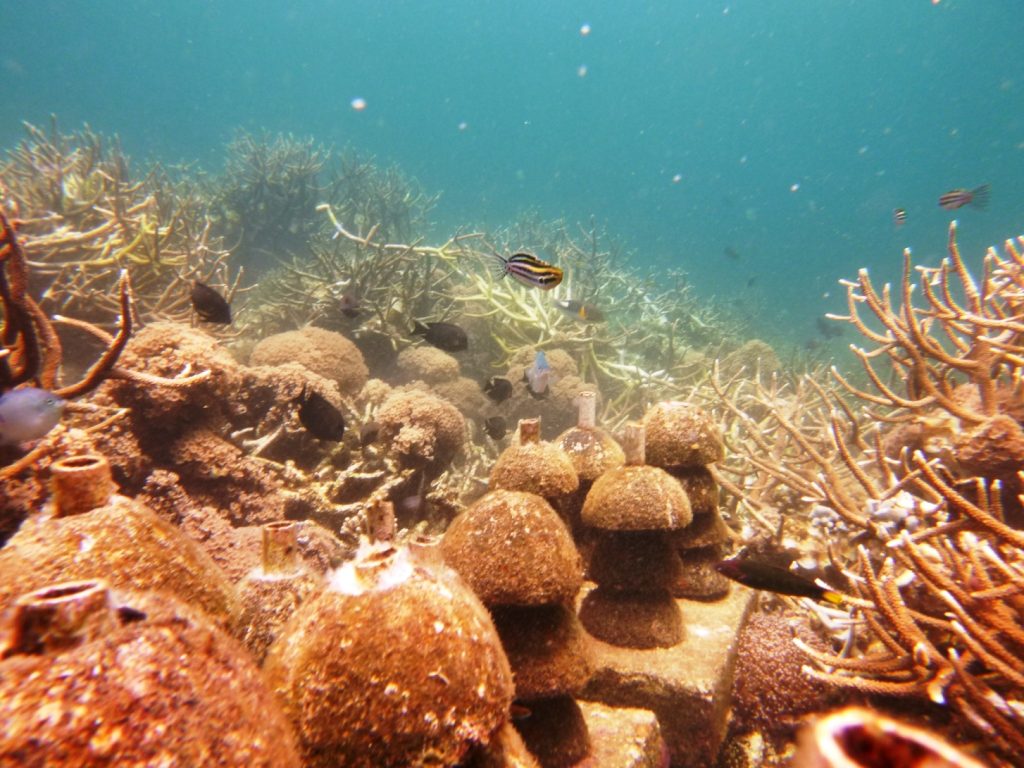
- Coconut shell substrates, utilizing locally available organic materials
- Spider web structures, steel frames designed to hold coral fragments securely
These trials enriched local experience with multiple restoration techniques and fostered knowledge exchange between communities and academic institutions.
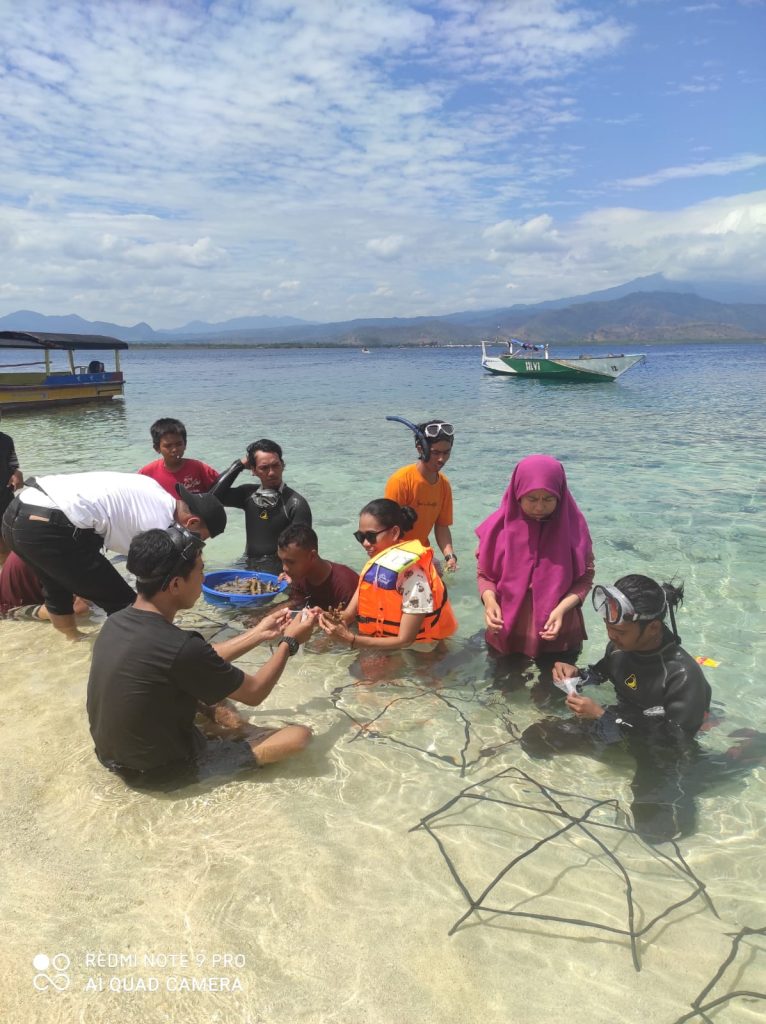
2023 – Structural Innovation and Community-Based Monitoring
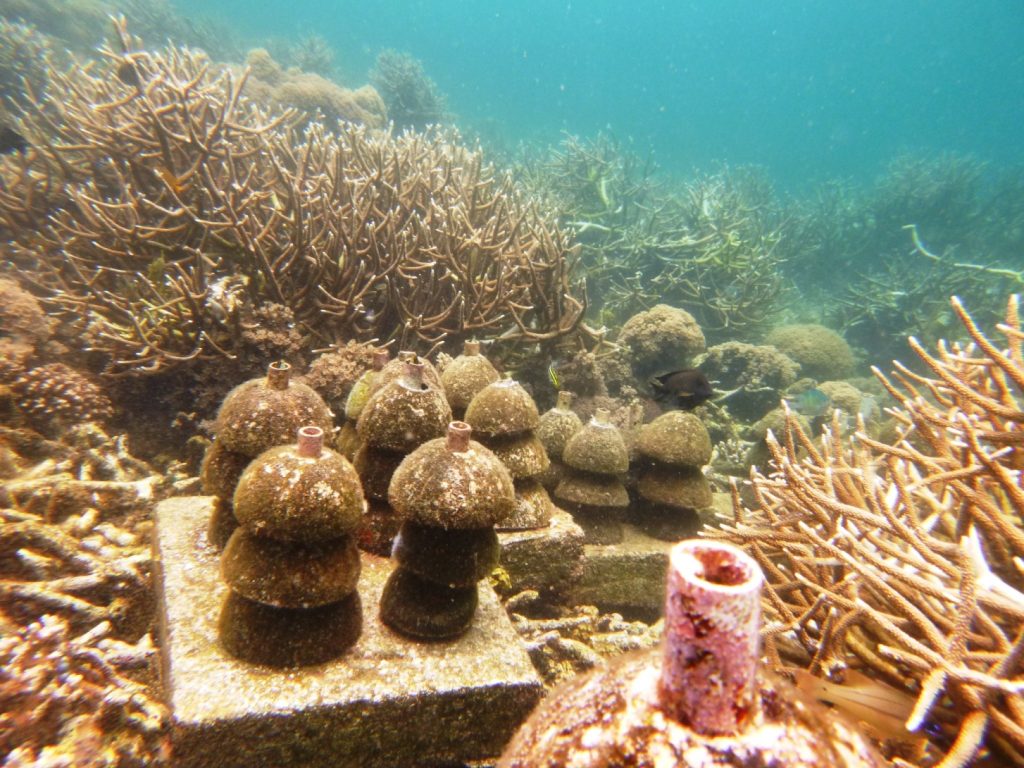
In 2023, with funding support from Ocean Park Conservation Foundation Hong Kong (OPCFHK), we revisited the concrete and steel method, introducing a dome-shaped design to improve stability and create microhabitats for marine life.
At the same time, we began exploring Early Warning System (EWS) parameters for coral reef health that can be monitored by local communities. This work focuses on identifying simple, practical indicators that enable early detection of reef stress and support timely, community-led responses.
📘 Findings from the exploration of coral reef EWS parameters are published in the following journal: https://doi.org/10.29303/jstl.v9i4.560
Check the 1 minute video below.
***